24 June, 2026
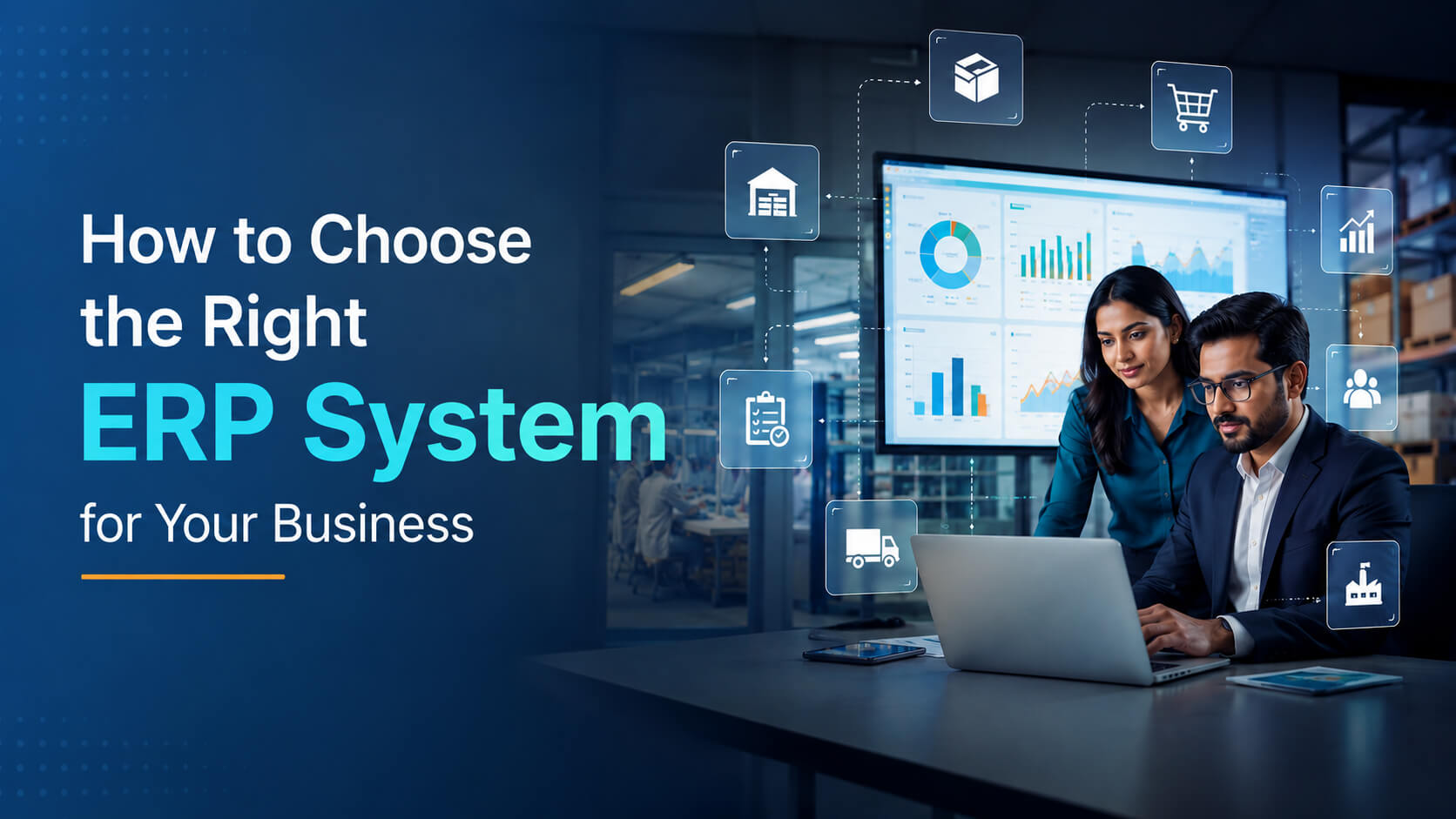
How to Choose the Right ERP System for Your Business
Learn how to choose the right ERP system for your business with a practical nine-step selection guide. Compare cloud and on-premises ERP, evaluate features, costs, security, integrations, Bangladesh VAT readiness, and vendor support to make a confident, low-risk decision.
Choosing ERP software is an operating-model decision, not a feature-shopping exercise. It affects finance, inventory, sales, procurement, HR, and reporting. The wrong system creates workarounds; the right one gives leaders a reliable view of the business. This guide explains how to choose the right ERP system for your business, compare deployment models, assess Bangladesh compliance needs, and run a vendor evaluation with less risk. What you will learn Direct answer: ERP is business software that connects functions such as accounting, sales, purchasing, inventory, production, and HR through shared data. The right ERP fits your real workflows, addresses priority bottlenecks, and can grow with your business without forcing expensive rework. An ERP becomes a single source of truth when a sales order moves through stock allocation, invoicing, delivery, and management reporting. That is why a manufacturer, trading company, hospital, and garment factory should not buy the same package by default. At SK Soft Solutions, established in 2022, we have seen this through work with organizations such as Armed Forces Medical College, garments factories, packaging businesses, and other operationally complex teams. In our experience, process clarity matters more than a long feature list. Expert Note: Start with the work your team performs every day—not a vendor’s module list. A system that supports your actual approval flows, item codes, production stages, and reports will outperform a “bigger” platform that users avoid. Direct answer: Choose an ERP by mapping processes, defining measurable priorities, selecting the right deployment model, checking integration and compliance needs, calculating total cost, validating security, testing real scenarios, checking vendor capability, and planning adoption before contract signature. List how an order moves from inquiry to payment. Include sales, purchase, inventory, production, accounts, VAT, payroll, and approvals. Mark duplicate entry, stock mismatches, spreadsheet dependency, delayed reporting, and manual handoffs. A Dhaka distributor may find three different stock figures across sales, warehouse, and accounts. A Gazipur garment supplier may need stronger links between orders, raw-material inventory, production, and delivery. Write requirements as outcomes. Replace “we need better reporting” with “branch managers need daily sales, stock, receivables, and cash reports by 10:00 a.m.” Classify every requirement as: Most SMEs start with finance, inventory, sales, purchase, and reporting. Add production or MRP for manufacturing, payroll and attendance for people-heavy operations, CRM for long sales cycles, and multi-branch controls for growing retail or distribution teams. The best ERP for a Chittagong importer is not necessarily the best one for a Narayanganj packaging factory. Industry workflows should determine modules, fields, approval rules, and dashboards. Cloud ERP is accessed through the internet and is typically subscription-based. It suits SMEs that need remote access, lower upfront server responsibility, automatic updates, and faster rollout. On-premises ERP runs on company-managed servers and can fit strict hosting policies or unusual offline needs. Map every system that must exchange data with the ERP: POS, e-commerce, barcode scanners, attendance devices, bank files, mobile apps, CRM, VAT software, and BI dashboards. Ask whether each connection uses an API, scheduled import, or manual upload. Standard integrations are usually safer and cheaper than custom code. Customize only when the workflow creates a real business advantage or meets a legal requirement. VAT-registered businesses should ask how the ERP supports invoice data, VAT calculations, audit trails, and handoffs to compliant tools or processes. The National Board of Revenue maintains an official directory of enlisted software firms, so proper vendor due diligence matters. Do not assume the “VAT module” covers your precise process. Ask the vendor to demonstrate invoice, return-reporting, adjustment, and approval scenarios using sample data. Your first-year cost can include licences or subscription, implementation, configuration, data cleaning, migration, integrations, training, equipment, support, and change requests. Ask for a three-year cost view that clearly states what is included and billed separately. Pro Tip: Compare vendors using identical assumptions: users, branches, modules, data history, integrations, training sessions, and support hours. A low initial quote can become expensive when these items are undefined. Require role-based access, multi-factor authentication where available, activity logs, backup frequency, recovery targets, and a process for removing former employees’ access. Confirm who owns the data, where it is hosted, how it can be exported, and what happens if connectivity is interrupted. Give each shortlisted vendor five real scenarios: receiving stock, approving a purchase, issuing an invoice, processing a return, closing accounts, or viewing a branch report. Include end users from accounts, warehouse, sales, operations, and management. Then speak with at least two comparable customers about implementation, training, support, and unresolved issues. Direct answer: Cloud ERP is usually better for SMEs that need quick deployment, remote access, easier scaling, and less server management. On-premises ERP can be better when direct server control, internal data-hosting policy, or specialized offline requirements outweigh those benefits. For Bangladesh SMEs, assess internet reliability, locations, data policy, and internal IT capacity. Choose based on business risk—not trend. Direct answer: Your ERP should include only the modules and integrations needed to run high-value workflows accurately. Core modules commonly include finance, inventory, sales, purchase, and reporting; add industry functions only when they solve a real operating need. Use this demo checklist: Direct answer: Treat cost, security, and support as one decision. An affordable ERP is poor value if it exposes sensitive data, cannot recover from disruption, or leaves your team unsupported during month-end, stock counts, or production deadlines. Ask each vendor: The NIST Cybersecurity Framework offers a recognized structure for managing cyber risk. Practical controls for SMEs include MFA, software updates, least-privilege access, and regular backups. Direct answer: Use a weighted scorecard and choose the ERP provider with the best business fit, implementation method, support capability, and long-term value—not simply the lowest price or smoothest sales presentation. Based on projects we have delivered, successful implementation begins with clean master data, named process owners, clear approval rules, and role-based training. Appoint an executive sponsor and internal project lead before implementation begins. Pro Tip: Pilot one branch, department, or workflow where possible. A controlled pilot reveals data gaps, user objections, and approval issues before they affect the full organization. Direct answer: Avoid buying on price alone, accepting generic demos, over-customizing early, ignoring data quality, excluding end users, and treating training as optional. These mistakes create weak adoption, inaccurate reports, and avoidable costs after go-live. Warning signs include a vendor that cannot demonstrate your workflow with sample data; a project scope without acceptance criteria; an undefined migration plan; no stated support response times; or department leaders excluded from selection. Choose the right ERP system by mapping processes and ranking must-have requirements. Then compare systems for industry fit, modules, integration, VAT readiness, security, total cost, support, and user experience. Test real business scenarios before deciding. The best ERP system for a small business in Bangladesh fits its industry, user capacity, and compliance workflow. A retailer may need POS and inventory integration, while a garment factory may need production, inventory, payroll, and order tracking. Local support and VAT-process compatibility are important early checks. Most SMEs should consider cloud ERP for remote access, faster rollout, simpler maintenance, and flexible scaling. Choose on-premises ERP when server control, internal hosting policy, or specialized offline needs outweigh cloud benefits. Review connectivity, security, and IT capacity first. ERP implementation cost in Bangladesh varies by users, modules, business complexity, migration, integrations, training, and support. Compare more than software price. Request a written three-year estimate separating recurring fees from one-time implementation and customization costs. Start with modules that control your biggest operational risks. For many SMEs, that means finance, inventory, sales, purchase, and reporting. Add production, payroll, CRM, multi-branch management, or advanced analytics after core data and workflows are stable. Vendor support matters because ERP issues can affect billing, inventory, payroll, reporting, and month-end close. Choose a provider with defined response times, escalation contacts, training, documentation, and maintenance. Local support can speed issue resolution in Dhaka, Chittagong, and industrial areas. The right ERP system gives your business accurate data, repeatable workflows, stronger control, and room to scale. Begin with operational problems, verify the solution through real scenarios, and compare total value over at least three years. SK Soft Solutions develops practical ERP, POS, and custom software for Bangladesh businesses. Contact our team to discuss your workflow, request a tailored ERP consultation, or arrange a product demonstration.
What is ERP, and why does system fit matter?
How to choose the right ERP system for your business: 9 steps
1. Map processes and pain points
2. Turn problems into measurable requirements
3. Select modules by business model
4. Choose cloud ERP or on-premises ERP
5. Confirm integrations before customization
6. Check Bangladesh VAT and compliance readiness
7. Calculate total cost of ownership
8. Validate security and recovery
9. Run a role-based demo and reference check
Cloud ERP vs on-premises ERP: which is better for an SME?
Decision factor
Cloud ERP
On-premises ERP
Upfront infrastructure
Lower
Higher
Remote access
Usually easier
Requires secure setup
Updates
Vendor-managed
Managed by your IT team
Scaling
Add users/modules as needed
May require server upgrades
Best fit
Multi-branch, growing SMEs
Strict hosting or specialized setups
Which features and integrations should your ERP include?
How should you assess cost, security, and vendor support?
How should you compare vendors and prepare for implementation?
Evaluation area
Weight
Process and industry fit
25
Modules and usability
15
Integration and migration
15
Three-year cost
15
Security and data ownership
10
Local support and training
10
Scalability and roadmap
10
What ERP selection mistakes should you avoid?
Frequently asked questions
How do I choose the right ERP system for my business?
What is the best ERP system for a small business in Bangladesh?
Should an SME choose cloud ERP or on-premises ERP?
How much does ERP implementation cost in Bangladesh?
Which ERP modules should I implement first?
Why is vendor support important when choosing the right ERP system for your business?
Choose an ERP that your team can actually use