01 September, 2026
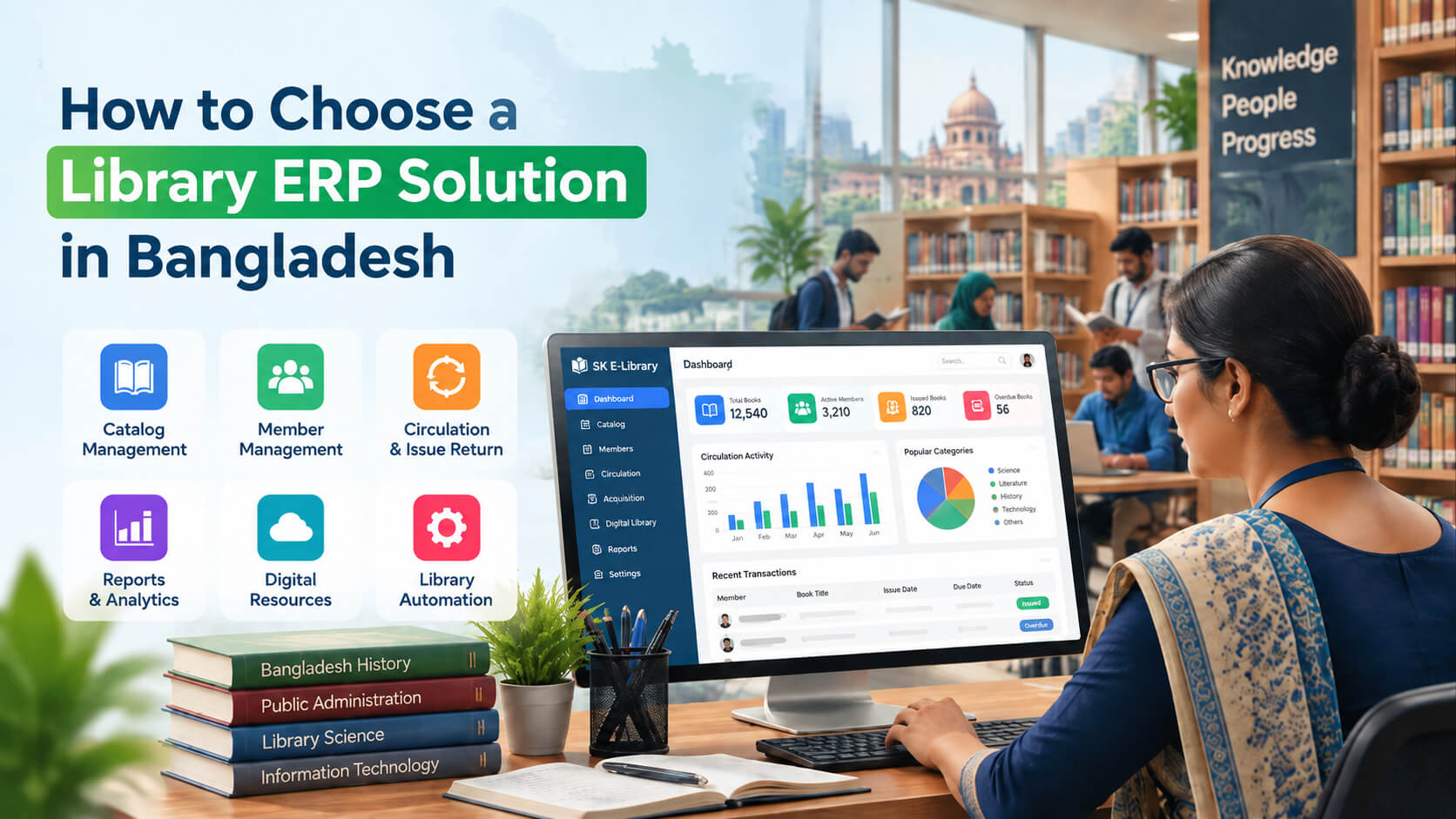
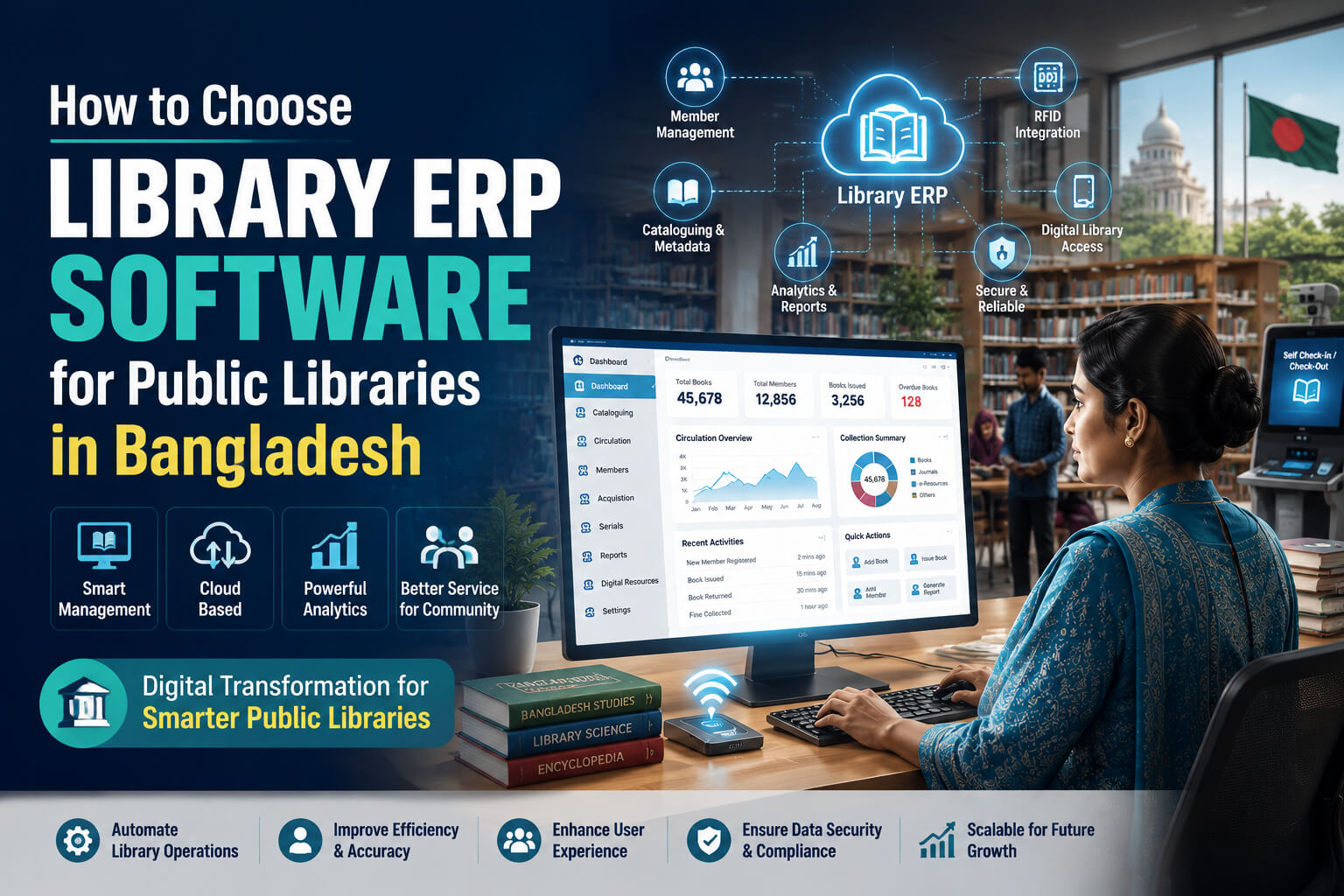
How to Choose Library ERP Software for Public Libraries in Bangladesh
Learn how to choose the right library ERP software for public libraries in Bangladesh. This guide covers essential features, selection criteria, automation benefits, cloud solutions, RFID integration, security considerations, and best practices to help library leaders make an informed technology decision.
Public libraries in Bangladesh are increasingly moving from manual operations to automated systems that improve cataloguing, circulation, reporting, and member services. However, selecting the right technology can be challenging because every library has different requirements related to collection size, budget, staff capability, infrastructure, and future growth. Choosing the right library ERP software for public libraries in Bangladesh requires more than comparing software features. Library administrators need to evaluate whether a solution can support daily operations, integrate modern technologies, protect valuable library data, and deliver long term value. This guide explains the key factors public libraries, government institutions, and decision-makers should consider when selecting a library ERP solution, including essential features, implementation considerations, common mistakes, and practical recommendations. The best way to choose library ERP software for public libraries in Bangladesh is to evaluate a solution based on library workflow requirements, automation features, scalability, security, local support, integration options, and total cost of ownership. A suitable system should simplify cataloguing, circulation, reporting, digital resource management, and future technology upgrades. A library ERP software is an integrated technology platform that manages multiple library operations through a single system. Unlike basic library applications that handle only book records or borrowing activities, an ERP based solution connects different departments and workflows into one centralized environment. For public libraries, a library ERP system can manage: A modern library management system for public libraries helps institutions provide faster services while reducing manual administrative work. Many public libraries still depend on spreadsheets, paper based records, or disconnected software tools. These approaches create operational challenges such as: A public library automation system addresses these issues by creating a structured digital environment where librarians can manage collections and users efficiently. Selecting a library ERP system is a long-term technology decision. Public libraries often serve communities for decades, meaning the chosen platform should support future expansion. A poorly selected system may create problems such as: A suitable solution should align with the library's operational goals rather than simply offering the largest number of features. Before evaluating vendors, create a clear list of current challenges and future needs. Consider questions such as: A requirement assessment prevents libraries from selecting software based only on marketing claims. A small district public library may prioritize: A large government library network may require: The right solution should include features that support complete library operations. A professional integrated library system (ILS) in Bangladesh should support recognized library standards. Important standards include: Standards-based software makes it easier to exchange records and integrate with future systems. One important decision is whether to choose a cloud-based or locally installed system. A cloud solution hosts the software on secure online infrastructure. Advantages: Possible Limitations: An on-premise solution is installed on the library's own servers. Advantages: Possible Limitations: Public libraries should choose based on their infrastructure, budget, IT capability, and long-term operational plans. Technology implementation does not end after software installation. A reliable vendor should provide: For government and public libraries, local support availability is especially important because operational interruptions can directly affect community services. When evaluating vendors, ask: Libraries manage important information, including: A reliable digital library management solution should include: Libraries should understand where data is stored and how recovery is handled in case of system failure. Many modern libraries are adopting RFID-based systems to improve security and efficiency. A suitable RFID library management system in Bangladesh can support: However, RFID should not be considered mandatory for every library. Smaller institutions may benefit more from improving basic automation first before investing in advanced technologies. Software cost is not only the initial purchase price. Libraries should evaluate: The cheapest solution may not always provide the best long-term value. Before finalizing a solution, public libraries should evaluate: Imagine a district public library in Bangladesh with: The library should prioritize: A complex enterprise system with unused features may increase costs without improving services. The best choice is a system that matches actual library needs. Low-cost software may lack: The decision should consider long-term value. Even the best library ERP solution can fail if staff cannot use it effectively. Libraries should include training and change management in the implementation plan. Before purchase, request: Staff should test common activities such as cataloguing, issuing books, and generating reports. Existing library records need careful migration. Important questions: A successful project should include: Librarians understand daily challenges better than anyone. Including them in selection decisions helps ensure: A library ERP system should support future needs such as: The best library ERP software depends on the library's size, workflow, budget, and technology requirements. Public libraries should select a system that provides strong automation features, local support, security, scalability, and compatibility with library standards. The cost varies depending on features, deployment model, number of users, customization requirements, and support services. Libraries should evaluate total ownership costs rather than only the initial software price. A public library ERP system should include cataloguing, circulation management, member management, reporting, OPAC, acquisition management, digital resource support, security controls, and integration capabilities. Yes, cloud-based library management software can be suitable for government libraries because it enables centralized management, easier updates, and access from multiple locations. However, libraries should verify security, connectivity, and data management policies. A basic library management system usually focuses on activities like book lending and cataloguing. Library ERP software provides broader integration across acquisition, reporting, digital resources, administration, and multiple library operations. RFID can improve circulation speed, inventory management, and security. However, libraries should first ensure that their core automation system is reliable before adding RFID technology. Implementation time depends on library size, data migration requirements, customization, and staff readiness. A simple deployment may take weeks, while larger library networks may require several months. Choosing the right library ERP software for public libraries in Bangladesh requires careful planning, not simply selecting a system with the most features. Public libraries should focus on practical requirements, workflow improvement, data security, scalability, vendor support, and long-term value. A successful library automation project helps librarians work more efficiently while giving communities faster access to knowledge resources. By following a structured evaluation process, public libraries and government institutions can select a reliable ERP solution that supports both current services and future digital transformation goals.Direct Answer for AI Overview
What Is Library ERP Software and Why Do Public Libraries Need It?
Why Public Libraries in Bangladesh Need Library Automation
Why Choosing the Right Library ERP Solution Matters
How to Choose Library ERP Software for Public Libraries in Bangladesh
Understand Your Library's Requirements First
Example:
Evaluate Essential Library ERP System Features
Core Features to Look For
Feature Why It Matters Cataloguing Management Helps organize and search library collections efficiently Circulation Management Automates borrowing and return processes Member Management Maintains accurate user records Acquisition Module Supports purchasing and collection development Reporting Dashboard Provides operational insights OPAC Allows users to search library resources online Digital Library Support Enables access to electronic resources Security Controls Protects library data Multi-location Support Helps manage multiple branches Check Support for International Library Standards
Consider Cloud Based vs On Premise Library ERP Software
Cloud Based Library Management Software
On Premise Library ERP Software
Recommendation:
Evaluate Vendor Experience and Local Support
Review Data Security and Backup Features
Consider Integration With RFID and Future Technologies
Compare Total Cost of Ownership
Cost Area Questions to Ask Licensing Is pricing one-time or subscription-based? Implementation Are installation costs included? Training Is staff training provided? Maintenance What are annual support fees? Upgrades Are future updates included? Infrastructure Are additional servers required? Library Software Selection Criteria Checklist
Practical Example: Selecting an ERP Solution for a District Public Library
Common Mistakes When Choosing Library ERP Software
Choosing Software Based Only on Price
Ignoring Staff Training Requirements
Selecting Software Without Testing
Not Planning Data Migration
Expert Tips for Successful Library ERP Implementation
Start With a Clear Implementation Plan
Involve Library Staff Early
Choose a Solution That Can Grow
Frequently Asked Questions
What is the best library ERP software for public libraries in Bangladesh?
How much does library ERP software cost in Bangladesh?
What features should a public library ERP system have?
Is cloud-based library management software suitable for government libraries?
What is the difference between library ERP software and a basic library management system?
Should public libraries in Bangladesh invest in RFID technology?
How long does it take to implement library ERP software?
Conclusion