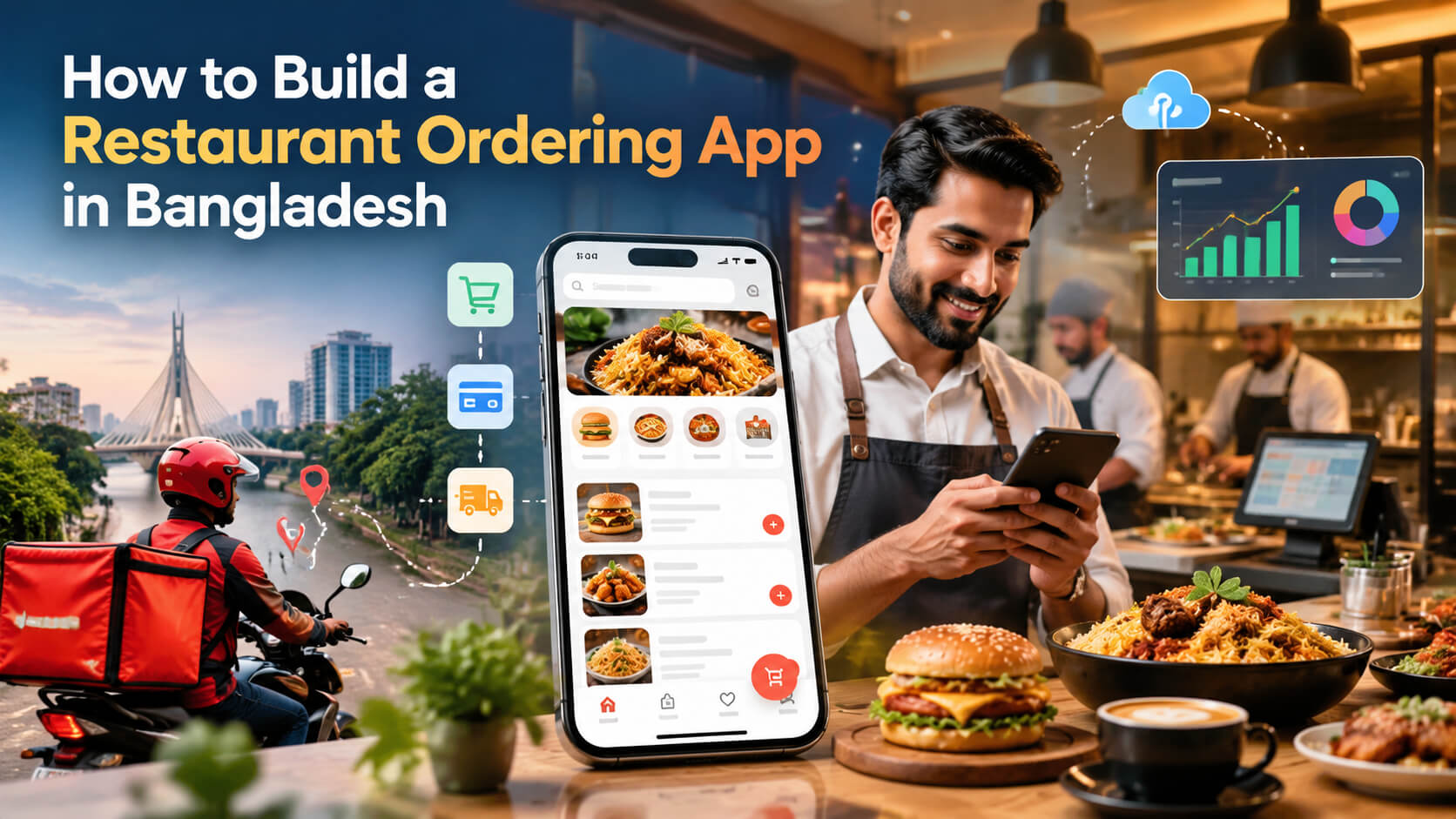
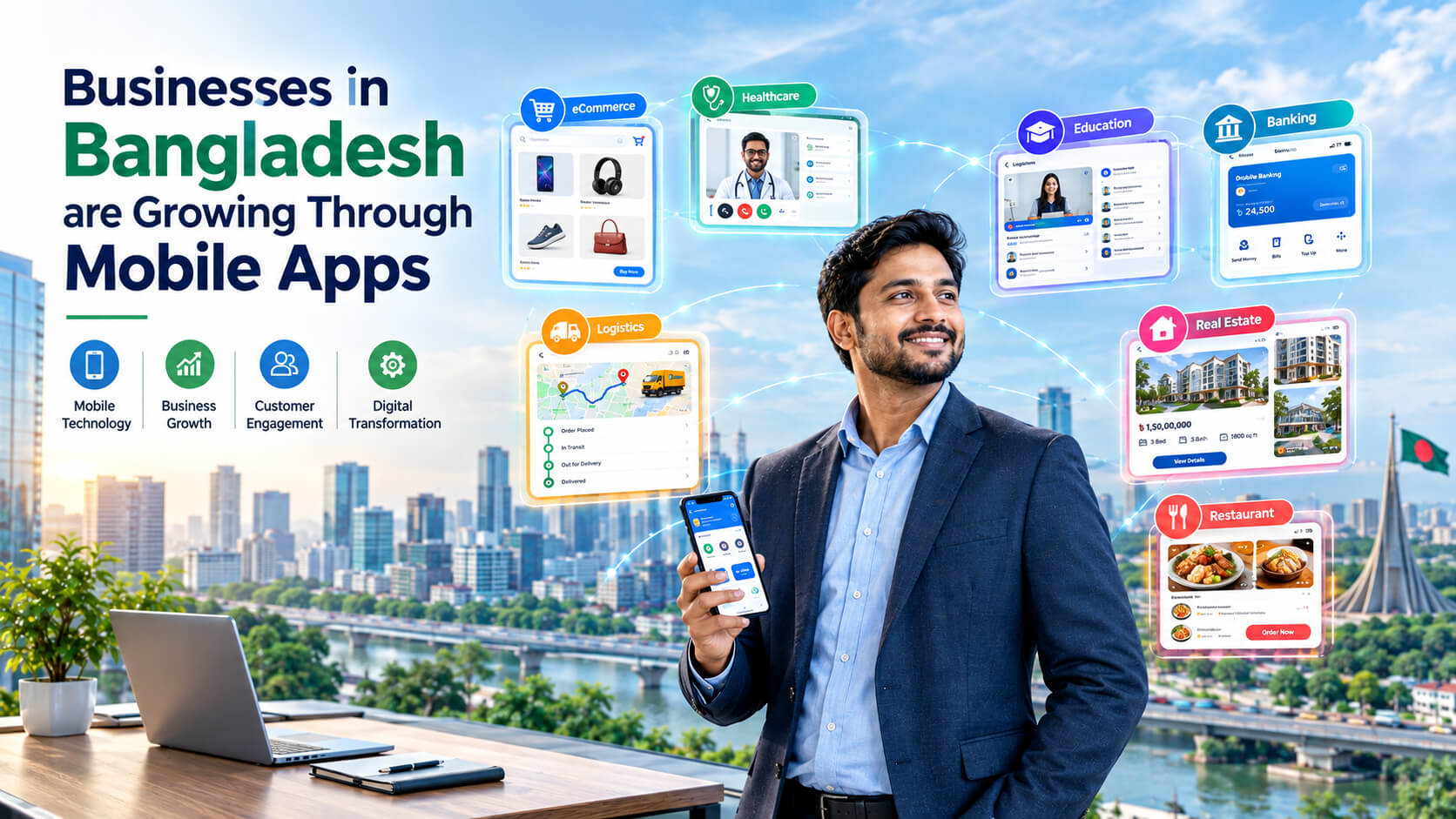
The restaurant industry in Bangladesh is becoming increasingly digital. Customers now prefer ordering food through mobile apps because they want faster service, easy payments, real-time order tracking, and personalized offers. For restaurant owners, relying only on third-party platforms can reduce profit margins and limit access to customer data.
A Restaurant Ordering App in Bangladesh allows businesses to create their own digital ordering channel, manage customer relationships, and improve daily operations. Whether you run a small cafe, a single restaurant, or a multi branch food chain, a custom app can help you accept direct orders and build long-term customer loyalty.
This guide explains how to build a restaurant ordering app, required features, development steps, estimated costs, technology choices, and important considerations before starting your project.
Direct Answer
A restaurant ordering app in Bangladesh can be built by defining business goals, selecting essential features, designing the user interface, developing customer and restaurant management systems, integrating payment gateways and POS systems, testing the application, and launching it on Android and iOS platforms. Development cost depends on features, design complexity, integrations, and technology requirements.
What Is a Restaurant Ordering App?
A restaurant ordering app is a mobile application that allows customers to browse menus, select food items, place orders, make payments, and track deliveries directly from their smartphones.
Instead of depending completely on third-party food delivery platforms, restaurants can use their own app to manage:
- Online food ordering
- Customer information
- Payments
- Delivery operations
- Promotions
- Loyalty programs
- Sales reports
A modern restaurant app usually includes three main systems:
| System | Purpose |
| Customer App | Allows users to browse menu and place orders |
| Restaurant Dashboard | Helps owners manage orders, menus, and customers |
| Delivery App | Helps delivery personnel manage deliveries |
Why Should Restaurants in Bangladesh Build Their Own Ordering App?
Bangladesh has a growing online food ordering market, especially in cities like Dhaka, Chattogram, Sylhet, and Rajshahi. Popular food delivery platforms have changed customer habits, but many restaurants want more control over their sales channels.
A dedicated restaurant app provides several advantages.
1. Reduce Dependency on Third-Party Platforms
Many restaurants use food marketplaces to reach customers. However, these platforms may charge service fees or commissions.
With a custom ordering app, restaurants can:
- Receive direct orders
- Build their own customer database
- Create personalized promotions
- Control customer communication
2. Increase Customer Loyalty
A restaurant app helps businesses create stronger relationships with customers.
Features like:
- Loyalty points
- Discount coupons
- Membership programs
- Personalized recommendations
encourage repeat purchases.
3. Improve Order Management
Manual order processing through phone calls or social media messages can create mistakes.
An online food ordering system for restaurants helps automate:
- Order receiving
- Kitchen notifications
- Payment confirmation
- Delivery assignment
- Customer updates
4. Get Valuable Business Insights
A restaurant app collects useful business data, such as:
- Most ordered dishes
- Customer preferences
- Peak ordering times
- Sales performance
These insights help owners make better decisions.
How to Build a Restaurant Ordering App in Bangladesh?
Building a restaurant app requires proper planning, design, development, and testing.
The restaurant app development process usually includes the following steps:
Step 1: Define Your Restaurant App Goals
Before development starts, decide what problem your app will solve.
Ask:
- Do you need only online ordering?
- Do you want your own delivery system?
- Will you manage multiple branches?
- Do you need POS integration?
- Do you need customer loyalty features?
For example:
Small Restaurant
May need:
- Customer ordering app
- Menu management
- Payment integration
- Order notifications
Food Chain
May need:
- Multi-branch management
- Central dashboard
- Inventory tracking
- Advanced analytics
Step 2: Choose the Right Type of Restaurant App
Different businesses require different solutions.
Single Restaurant Ordering App
Best for:
- Restaurants
- Cafes
- Bakeries
- Cloud kitchens
Features:
- Digital menu
- Online ordering
- Customer accounts
- Payment system
Multi-Restaurant Food Delivery App
Best for:
- Food marketplaces
- Startup entrepreneurs
Similar to platforms that connect multiple restaurants with customers.
Requires:
- Restaurant management panel
- Customer app
- Delivery partner app
- Admin dashboard
Restaurant POS Integration App
Best for:
- Medium and large restaurants
It connects ordering systems with existing POS software.
Benefits:
- Automatic order syncing
- Better inventory management
- Reduced manual work
Step 3: Select Essential Restaurant Mobile App Features
The success of a restaurant app depends heavily on its features.
Here are the most important restaurant mobile app features:
Customer App Features
Digital Food Menu
Customers should easily view:
- Food categories
- Prices
- Images
- Ingredients
- Availability
User Registration
Allow customers to create accounts using:
- Phone number
- Email
- Social login
Search and Filters
Customers should quickly find:
- Food categories
- Popular dishes
- Offers
Cart and Checkout
A simple checkout process improves conversions.
It should include:
- Selected items
- Quantity adjustment
- Delivery address
- Payment method
Online Payment Integration
For Bangladesh, businesses commonly consider local payment options such as:
- Mobile financial services
- Debit/credit cards
- Online banking
Payment availability should be verified with current provider requirements before implementation.
Real-Time Order Tracking
Customers appreciate knowing:
- Order confirmed
- Food preparation status
- Delivery progress
Push Notifications
Useful notifications include:
- Order confirmation
- Discounts
- New menu items
- Special offers
Restaurant Dashboard Features
Restaurant owners need a powerful management system.
Important features include:
Order Management
Manage:
- New orders
- Accepted orders
- Cancelled orders
- Completed orders
Menu Management
Owners can:
- Add new dishes
- Change prices
- Update availability
- Create categories
Customer Management
Track:
- Customer history
- Frequent buyers
- Preferences
Sales Reports
Reports can include:
- Daily sales
- Monthly revenue
- Best-selling products
Delivery App Features
For restaurants managing their own delivery:
- Delivery assignment
- Route information
- Delivery status updates
- Customer contact options
Restaurant App Development Cost in Bangladesh
The restaurant app development cost in Bangladesh depends on the project scope, features, design complexity, and development team.
A general estimate:
| App Type | Estimated Cost Range |
| Basic Restaurant Ordering App | BDT 2,00,000 – 5,00,000+ |
| Custom Restaurant App | BDT 5,00,000 – 15,00,000+ |
| Multi-Restaurant Delivery Platform | BDT 15,00,000+ |
Actual pricing varies depending on requirements, technology stack, integrations, maintenance, and customization.
Factors That Affect Restaurant App Development Cost
1. Number of Platforms
Developing for:
- Android only
- iOS only
- Android + iOS
affects the overall budget.
2. App Design Complexity
Custom UI/UX design requires more planning compared to template-based designs.
3. Required Features
Advanced features increase development time, including:
- AI recommendations
- Loyalty systems
- POS integration
- Multiple branches
- Analytics dashboard
4. Backend Development
A restaurant app requires secure backend systems for:
- Users
- Orders
- Payments
- Data storage
Restaurant App Development Process in Bangladesh
A successful restaurant app requires more than just coding. A structured development process ensures the final product meets customer expectations and business goals.
1. Requirement Analysis
The first stage is understanding the restaurant's needs.
The development team should analyze:
- Restaurant type
- Target customers
- Ordering workflow
- Payment requirements
- Delivery process
- Existing software systems
For example, a small cafe may only need online ordering, while a restaurant chain may require branch management and POS integration.
2. UI/UX Design
A restaurant app should be simple and easy to use.
Good design focuses on:
- Fast menu browsing
- Clear food images
- Simple checkout
- Easy navigation
- Mobile-friendly layouts
A customer should be able to complete an order within a few steps.
Important design screens include:
- Home page
- Menu page
- Food details page
- Cart page
- Checkout page
- Order tracking page
3. Mobile App Development
Developers build the customer application according to the approved design.
Common technology choices include:
| Technology | Suitable For |
| Flutter | Cross-platform Android and iOS apps |
| React Native | Cross-platform mobile applications |
| Native Android/iOS | High-performance customized apps |
The best choice depends on budget, performance needs, and future expansion plans.
4. Backend Development
The backend controls the core operations of the application.
It manages:
- Customer accounts
- Food menus
- Orders
- Payments
- Notifications
- Reports
A secure backend is essential because restaurants handle customer information and transaction data.
5. Payment Gateway Integration
For Bangladesh-based restaurant apps, payment options should match customer preferences.
Possible integrations include:
- Mobile financial services
- Card payments
- Online banking solutions
Before integration, businesses should verify current payment provider requirements and compliance rules.
6. Testing and Quality Assurance
Before launching, the app should be tested for:
- Speed
- Security
- Payment accuracy
- Order processing
- Device compatibility
- User experience
Testing helps prevent problems such as:
- Failed orders
- Incorrect prices
- Payment errors
- App crashes
7. App Launch and Maintenance
After testing, the application can be published on:
- Google Play Store
- Apple App Store
However, launching the app is not the final step.
Regular maintenance is required for:
- Security updates
- Bug fixes
- Feature improvements
- Performance optimization
Technology Stack for a Restaurant Ordering App
The technology stack depends on project requirements.
A typical restaurant application may include:
| Component | Technology Examples |
| Mobile App | Flutter, React Native, Kotlin, Swift |
| Backend | Node.js, Laravel, Django |
| Database | MySQL, PostgreSQL, Firebase |
| Cloud Hosting | AWS, Google Cloud, Azure |
| Payment | Local payment gateway APIs |
| Notifications | Firebase Cloud Messaging |
Practical Example: Restaurant App for a Dhaka-Based Food Business
Imagine a restaurant in Dhaka that receives 200 daily orders through phone calls and social media.
Problems:
- Employees manually write orders
- Customers wait for confirmation
- Mistakes happen during busy hours
- Customer data is not stored
After implementing a custom restaurant ordering app:
Customers can:
- Browse the menu
- Order directly
- Pay online
- Track delivery
Restaurant owners can:
- View sales reports
- Manage menu items
- Track customer behavior
- Send promotions
This creates a smoother ordering experience for both customers and staff.
Common Mistakes When Building a Restaurant Ordering App
Many businesses make mistakes during app development. Avoiding these issues can save time and money.
1. Building Too Many Features Initially
A common mistake is trying to include every possible feature in the first version.
Instead:
Start with essential features:
- Menu
- Ordering
- Payment
- Customer account
- Order management
Additional features can be added later.
2. Ignoring User Experience
A complicated app can reduce customer adoption.
Avoid:
- Too many steps before checkout
- Confusing navigation
- Slow loading screens
Customers expect convenience.
3. Not Planning for Growth
A restaurant app should be designed for future expansion.
Consider:
- More branches
- More customers
- More products
- Advanced reporting
4. Choosing Development Based Only on Price
The cheapest option may not always provide the quality needed.
Evaluate:
- Previous experience
- Technical expertise
- Support services
- Security practices
5. Forgetting Restaurant Operations
An app should support daily business operations, not just customer ordering.
Important integrations may include:
- POS systems
- Inventory management
- Kitchen display systems
Expert Tips for Building a Successful Restaurant Ordering App
Start With an MVP
A Minimum Viable Product (MVP) includes the most important features needed to launch.
Recommended first version:
- Customer ordering app
- Restaurant dashboard
- Payment integration
- Order notifications
- Basic reports
After collecting user feedback, improve the app gradually.
Focus on Direct Customer Relationships
Your app should not only process orders.
Use it to:
- Reward loyal customers
- Send personalized offers
- Collect feedback
- Improve customer experience
Integrate With Existing Systems
For established restaurants, connecting the app with existing systems can improve efficiency.
Examples:
- Restaurant POS integration app
- Inventory software connection
- Accounting system integration
Optimize for Local Customers
A Bangladesh-focused restaurant app should consider:
- Bengali language support
- Local payment preferences
- Mobile-first design
- Local delivery workflows
How to Choose a Food Ordering App Development Company in Bangladesh?
Selecting the right development partner is important for long-term success.
Look for:
Experience in Restaurant Applications
Check whether the company has experience with:
- Food ordering platforms
- POS systems
- Business applications
Strong Technical Support
A reliable company should provide:
- Maintenance
- Security updates
- Bug fixing
- Future improvements
Transparent Development Process
A professional team should clearly explain:
- Timeline
- Cost
- Features
- Deliverables
Portfolio and Previous Projects
Review:
- Existing apps
- Client feedback
- Case studies
A company experienced in custom restaurant app development can better understand restaurant workflows.
Restaurant Ordering App vs Third-Party Food Delivery Platforms
| Factor | Own Restaurant App | Third-Party Platform |
| Customer Data | Full ownership | Limited access |
| Branding | Complete control | Platform-focused |
| Commission | No marketplace commission | Usually applicable |
| Customer Loyalty | Easier to build | Limited |
| Setup Cost | Higher initial investment | Faster setup |
Both options can work depending on business goals. Many restaurants use third-party platforms for customer acquisition while building their own digital ordering channels.
Frequently Asked Questions (FAQs)
1. How much does it cost to build a restaurant ordering app in Bangladesh?
The cost depends on features, design, platforms, and integrations. A basic restaurant app may start from a few lakh BDT, while advanced systems with delivery management, POS integration, and multiple branches require a larger investment.
2. How long does it take to develop a restaurant app?
A simple restaurant ordering app may take several weeks to a few months. More complex projects with custom features, dashboards, and integrations require additional development time.
3. What features should a restaurant ordering app have?
Essential features include digital menus, food search, cart management, online payments, order tracking, notifications, customer accounts, and restaurant management dashboards.
4. Can a small restaurant build its own ordering app?
Yes. Small restaurants can start with a simple app focused on online ordering and customer management. They can add advanced features like loyalty programs and POS integration as the business grows.
5. Should restaurants build an app or use food delivery platforms?
Both options have advantages. Delivery platforms provide customer reach, while a dedicated app gives restaurants more control over branding, customer relationships, and ordering data.
6. What is the difference between a restaurant app and a food delivery app?
A restaurant app usually focuses on one business, while a food delivery app connects multiple restaurants with customers and often requires restaurant, customer, delivery, and admin systems.
7. Can a restaurant app integrate with POS software?
Yes. A Restaurant POS integration app can connect online orders with existing restaurant systems to reduce manual entry and improve operational efficiency.
Conclusion
Building a Restaurant Ordering App in Bangladesh helps restaurants create a direct digital connection with customers, improve order management, and build a stronger online presence.
The right solution depends on your restaurant size, business goals, budget, and future plans. A small cafe may need a simple ordering system, while a growing food chain may require advanced features such as POS integration, customer analytics, and multi-branch management.
Before starting development, focus on customer experience, essential features, security, and scalability. Working with an experienced food ordering app development company in Bangladesh can help transform your restaurant idea into a reliable digital platform.
A well-planned restaurant app is not only an ordering tool. It becomes a complete system for improving customer relationships and growing your food business.